- Turn it down
- Keep it short
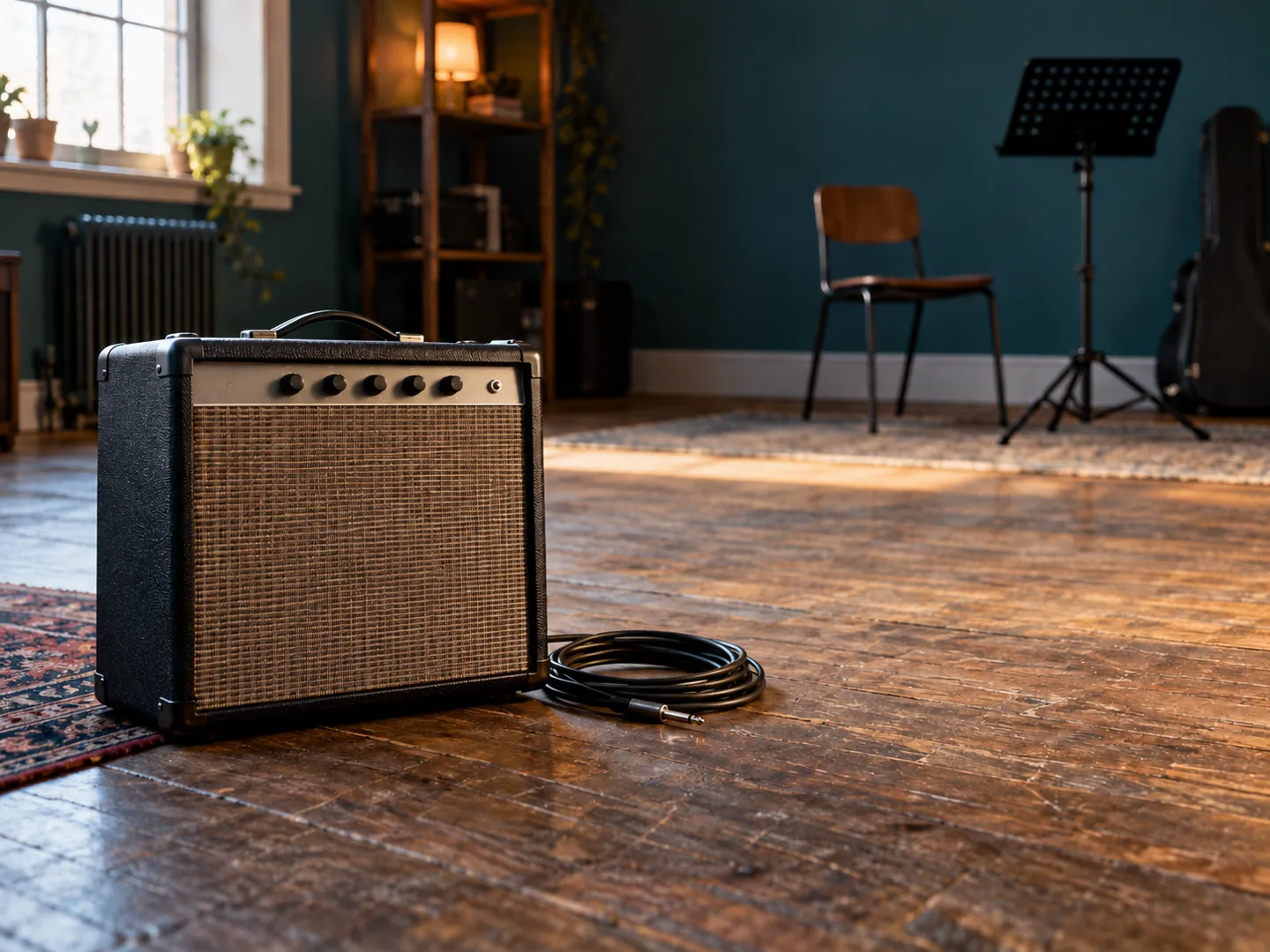
- Step back
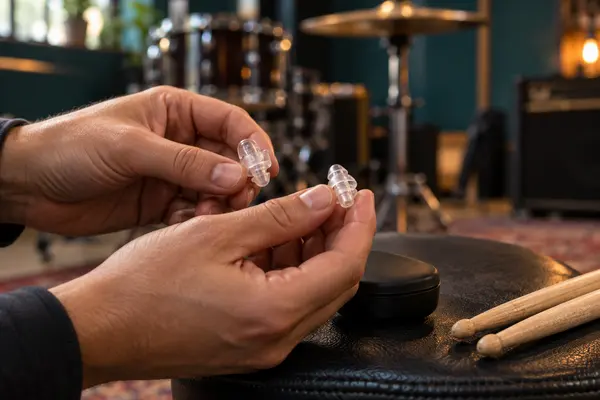
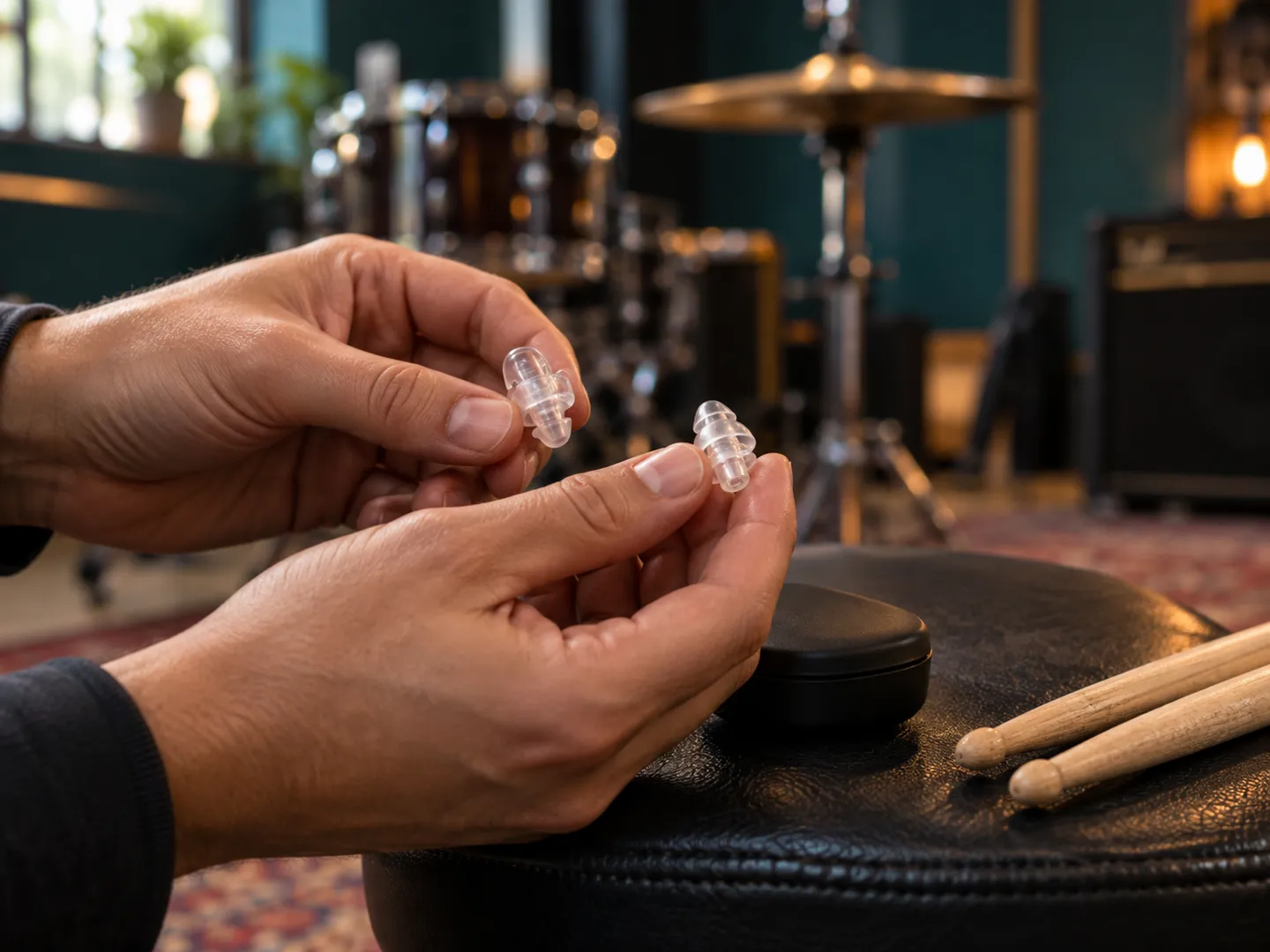
- Plug in your ears
LEVEL AND TIME
Turn it down a notch
Each 3 decibels louder halves the recommended daily time, so a small cut in volume buys a lot of rehearsal.
Try the time check doodleband
Updated
A HEARING GUIDE FOR NEW BANDS
Loudness and time add up, and the damage does not grow back.
Starting a band means hours in a small room with drums and amplifiers. You do not need to play quietly, but it helps to know how volume, time and distance trade off. Here is what the hearing research and safety guidance say, in plain English.
Plain English, with the sources linked.
3 dB halves the time
Check your rehearsal time
THE SHORT ANSWER
Hearing guidance gives three levers you control:
how loud, how long and how close.
LEVEL AND TIME
Each 3 decibels louder halves the recommended daily time, so a small cut in volume buys a lot of rehearsal.
Try the time checkDISTANCE
Sound weakens with distance. Safety guidance keeps gig audiences at least 3 metres from loudspeakers where practical.
See the guidancePROTECTION
When you cannot turn down or move away, earplugs or earmuffs are the remaining option the guidance names.
Before the next rehearsalA QUICK TIME CHECK
Pick a sound level. The time shown is the daily maximum that follows from the US National Institute for Occupational Safety and Health (NIOSH) recommended limit: 85 dBA over eight hours, halved for every 3 dBA more.
This is a workplace guideline averaged over a day, not a promise of safety. It does not measure your room: only a sound level meter can tell you how loud your rehearsals are.
TWO STUDIES WORTH KNOWING
Large studies of musicians and young listeners
point the same way.
3.61×
Noise-induced hearing loss, adjusted hazard ratio
Health insurance records for more than 3 million people in Germany, 2004 to 2008, included 2,227 professional musicians. Compared with everyone else, they were diagnosed with noise-induced hearing loss at about three and a half times the rate.
MUSICIANS · 2014
48% vs 24%
Unsafe listening at loud venues vs headphones
A review of 33 studies with 19,046 people estimated that 48% of young people at loud entertainment venues, and 24% using personal listening devices, listened at unsafe levels: 0.67 to 1.35 billion people aged 12 to 34 at risk.
YOUNG LISTENERS · 2022
Neither study measured rehearsal rooms directly. They show that regular loud music is a real risk, which is why it pays to manage level, time and distance from the start.
BEFORE THE NEXT REHEARSAL
Agree a volume where everyone can still hear each other, then keep amplifiers from creeping up through the evening.
The louder the room, the shorter the safe time. Plan quiet breaks and talk through parts away from the amplifiers.
Sound weakens with distance, so do not stand right in front of a speaker or a cymbal if you can stand further away.
When you cannot lower the volume or move away, wear earplugs or earmuffs. Keep a pair with your instrument so they are always there.
EAR FACTS
The NIDCD says sounds at or below 70 dBA are generally considered safe, while sounds at or above 85 dBA can damage hearing, depending on how long they last.
NIOSH recommends 85 dBA averaged over an eight-hour day, and halving the exposure time for every 3 dBA increase above that level.
The sensory hair cells of the inner ear cannot be fixed or replaced in humans, so noise damage leads to permanent hearing loss.
The UK Health and Safety Executive recommends an event average of no more than 107 dB, advance warning above 96 dB, and audiences kept 3 metres from loudspeakers where practical.
Since 2008, UK workers in music and entertainment have been protected by the Control of Noise at Work Regulations 2005, explained in HSE's guide Sound advice.
QUICK QUESTIONS
Short answers to the questions new bands ask most.
How loud is too loud for band practice?
The US National Institute on Deafness and Other Communication Disorders says sounds at or below 70 dBA are generally considered safe, and sounds at or above 85 dBA can damage hearing, depending on how long they last.
How long can we rehearse at a loud level?
NIOSH recommends a limit of 85 dBA averaged over an eight-hour day, and halving the time for every 3 dBA above that: four hours at 88 dBA, two at 91, one at 94. It is a workplace guideline, not a guarantee.
Does hearing damaged by noise come back?
No. According to the NIDCD, the sensory hair cells in the inner ear cannot be fixed or replaced, so noise damage leads to permanent hearing loss. Once you lose some of your hearing, you cannot get it back.
Are musicians really at higher risk?
A German study of health insurance records from 2004 to 2008 found that the 2,227 professional musicians among more than 3 million insured people had an adjusted hazard ratio of 3.61 for noise-induced hearing loss.
How close should a gig audience stand to the speakers?
The UK Health and Safety Executive advises keeping the audience at least 3 metres from any loudspeaker where practical, and never less than 1 metre. It also recommends an event average of no more than 107 dB.
A NAME WITH A BEAT
doodleband.com is part of the DoodleSale portfolio. It isn't in an auction right now, but you can ask about leasing it.